An illustrative model built on the reference anatomy. It does not show any individual patient’s tissue and does not establish a diagnosis.
Grade 1 ATFL sprain
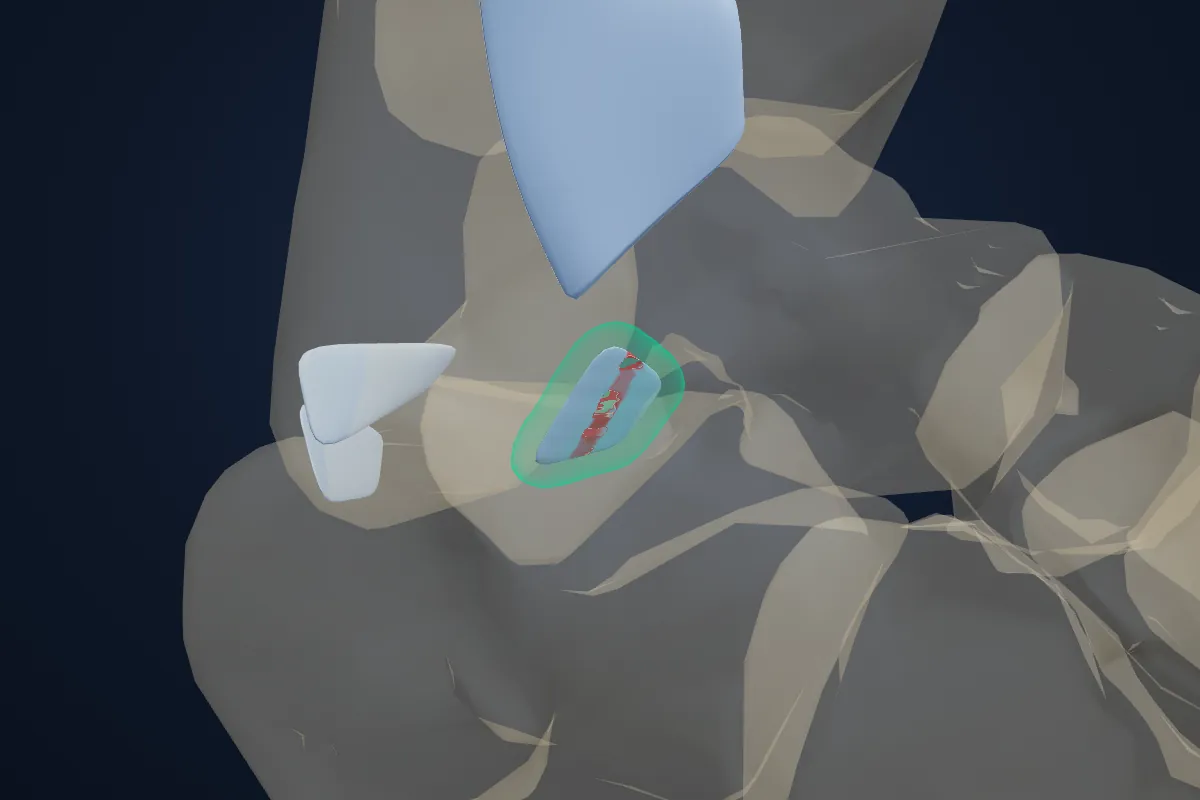
In plain English
In a grade 1 sprain the anterior talofibular ligament is over-stretched and has small, microscopic tears, but it still holds the joint steady. There is usually tenderness and some swelling, and it generally recovers within a few weeks.
What the visualisation shows
- Illustrative convention Over-stretched ligament with a few torn fibres; it remains intact and stable. In reality the damage is microscopic; the tears are enlarged so they can be seen. Shown in the middle of the ligament.
- Typical appearance Minor bleeding between the damaged fibres.
- Typical appearance Swelling around the ligament.
Clinical notes
- Grade 1 sprain: stretching with microscopic fibre damage; tenderness and mild swelling without increased laxity on stress testing.
- Grading criteria vary between joints and sources, and clinical grading correlates imperfectly with imaging. Sources differ: Grading systems differ.
Mechanism
- A force that takes the joint beyond its normal range in the direction the ligament restrains.
Grade 2 ATFL sprain
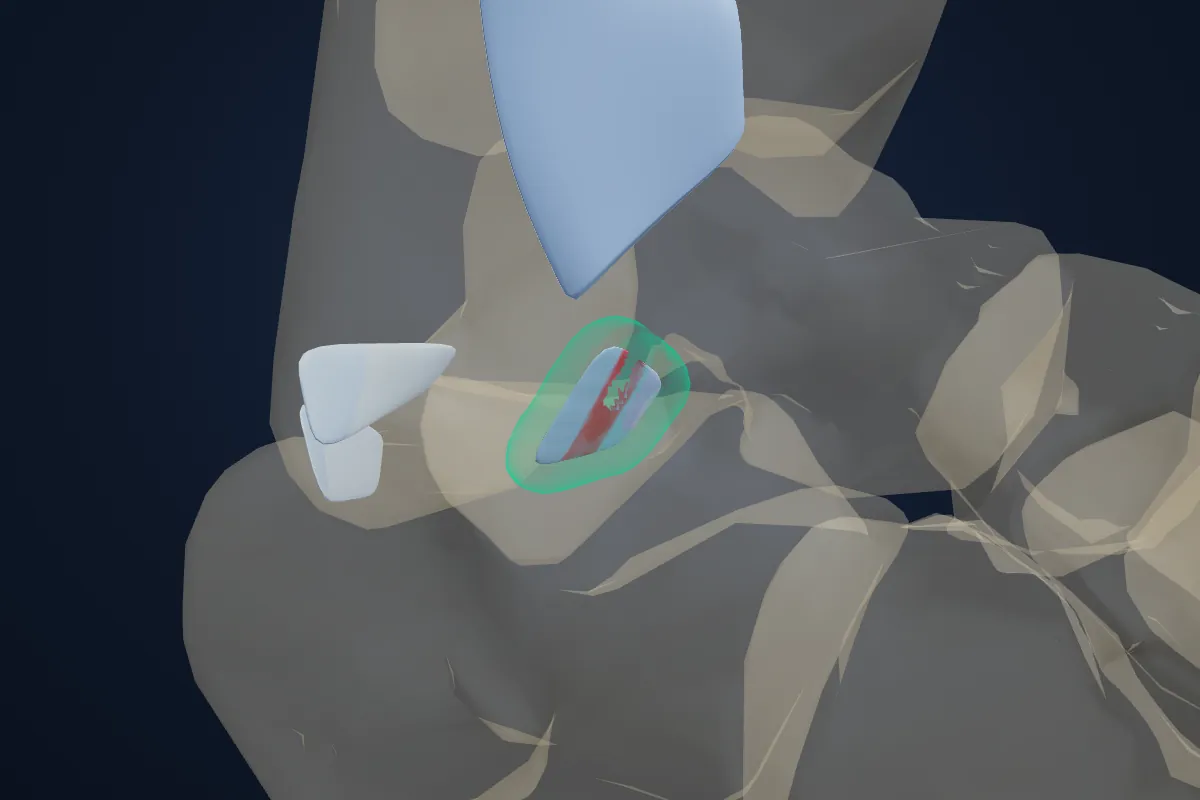
In plain English
When the ankle rolls inwards, the small ligament on the outside front of the ankle can be over-stretched. In a grade 2 sprain some of its fibres tear, but the ligament is still in one piece. It usually causes swelling, bruising and pain on the outside of the ankle, and most sprains recover well with the right rehabilitation.
What the visualisation shows
- Illustrative convention Partial disruption of the ligament fibres. Grade 2 means some, but not all, fibres are torn; the exact pattern varies and is shown here as a mid-ligament partial tear.
- Typical appearance Bleeding at the injured fibres, which causes the bruising often seen around the ankle after a sprain.
- Illustrative convention Swelling around the ligament, shown as a translucent shell (a visual convention).
Clinical notes
- Partial tear of the anterior talofibular ligament: some fibre disruption with the ligament remaining in continuity.
- Grading is clinical (and sometimes imaging-based); grade 2 is commonly described as a partial tear with moderate pain, swelling and some loss of function, with or without mild laxity. Sources differ: Several grading systems exist and they do not map exactly onto one appearance.
- The ATFL is usually the first, and often the only, lateral ligament injured; more severe sprains also involve the calcaneofibular ligament.
Mechanism
- Inversion of the foot, typically combined with plantarflexion, when the ATFL is most taut.
Grade 3 ATFL sprain
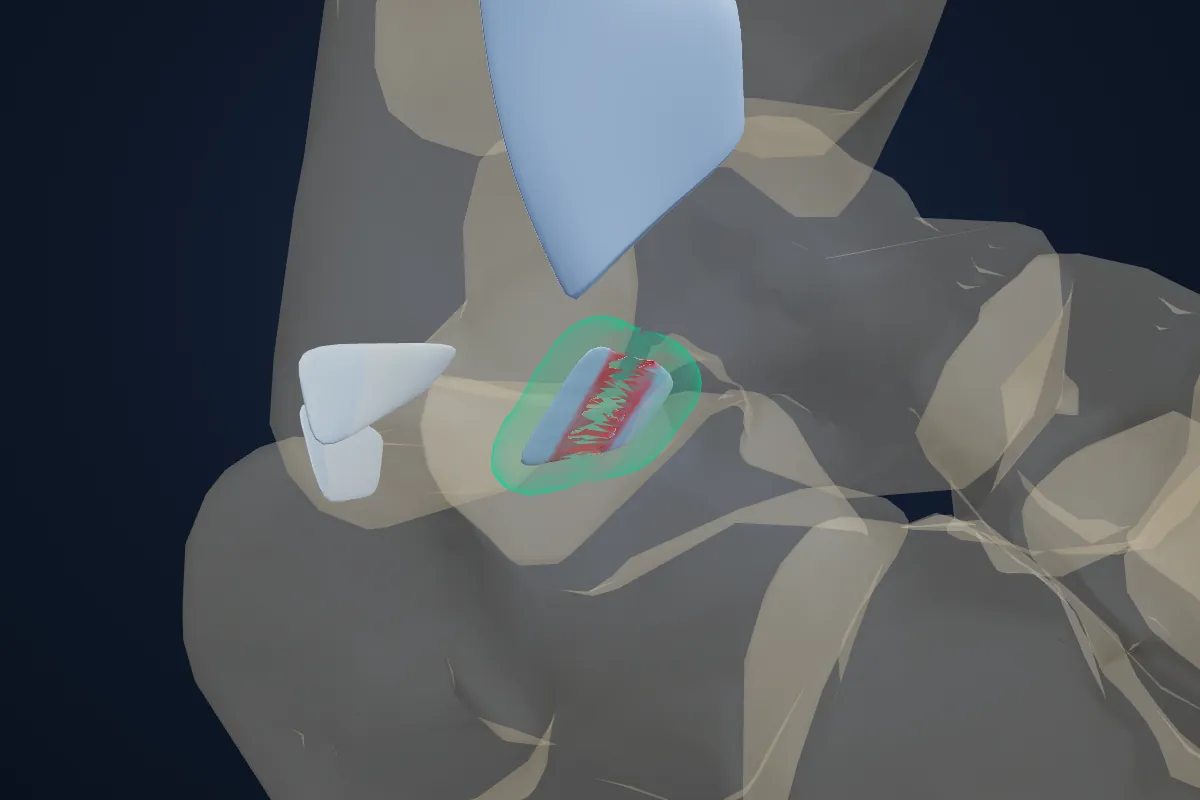
In plain English
In a grade 3 sprain the anterior talofibular ligament is torn right through, so it no longer restrains the joint in the usual way. There is often marked swelling and the joint may feel unstable. It needs assessment; treatment depends on the ligament and the person.
What the visualisation shows
- Established damage Complete tear: the ligament has lost continuity and the ends have separated. Shown in the middle of the ligament.
- Illustrative convention Frayed, torn fibres at the ends of the ligament (enlarged so they can be seen).
- Typical appearance Bleeding from the torn ends.
- Illustrative convention Swelling around the injury, shown as a translucent shell (a visual convention).
Clinical notes
- Grade 3 sprain: complete tear; marked laxity on stress testing without a firm end-point.
- Grading criteria vary between joints and sources, and clinical grading correlates imperfectly with imaging. Sources differ: Grading systems differ.
Mechanism
- A force that takes the joint beyond its normal range in the direction the ligament restrains.
Structures involved
References
- Standring S (ed). Gray’s Anatomy: The Anatomical Basis of Clinical Practice. 42nd ed. Elsevier; 2020. Section 9: Pelvic girdle and lower limb
- Moore KL, Dalley AF, Agur AMR. Clinically Oriented Anatomy. 9th ed. Wolters Kluwer; 2023. Chapter 7: Lower limb
Clinically reviewed and signed off by Arun Gray BSc MSc MSST on 21 November 2026.